
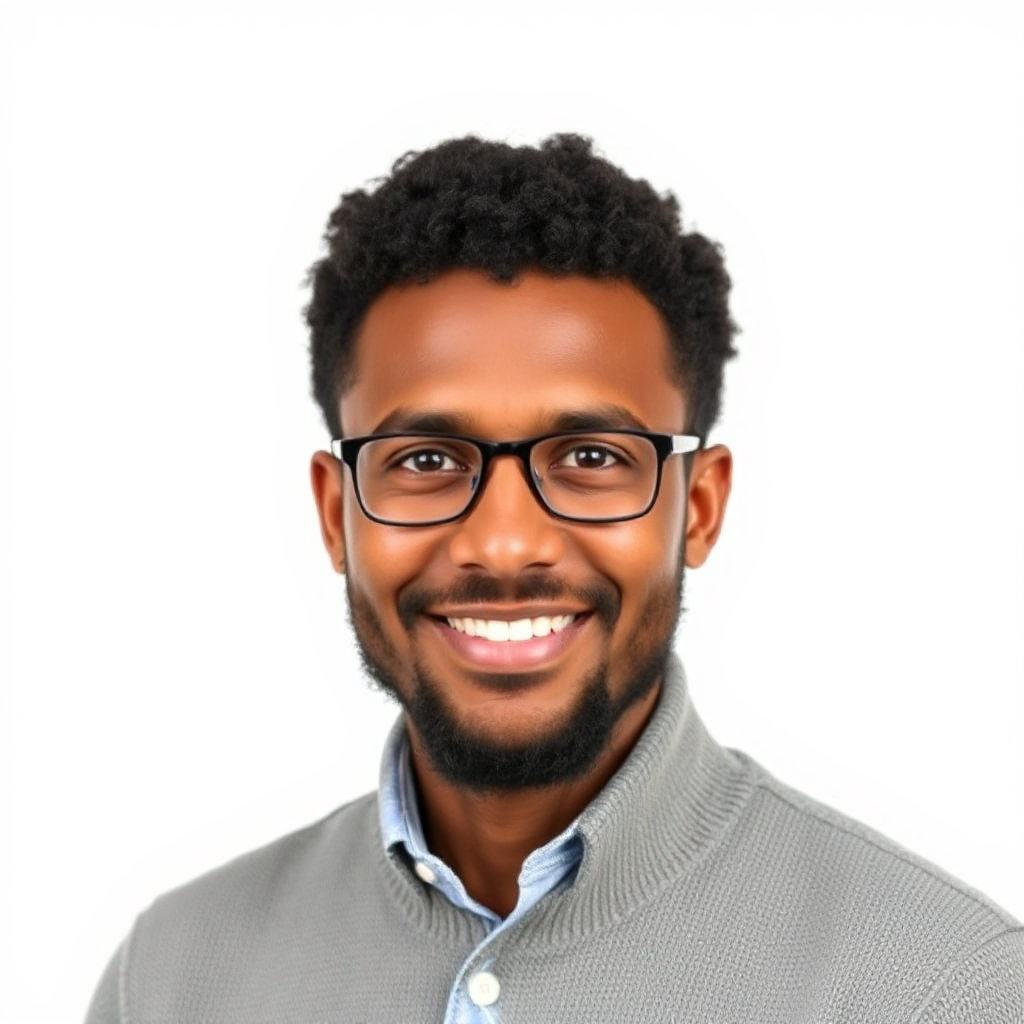
The former US vice-president Dick Cheney, who has died at age 84, was considered among the most powerful incumbents of the vice-presidency in the nation's history. Whereas many VPs were confined to marginal or symbolic roles, Cheney exercised substantial influence during the administration of George W Bush, to the point that he was often referred to as the "true president".
Bush resented such a characterisation and claimed the relationship was more complex. He observed that Cheney was respectful, invariably referring to him in official appearances as President, while he called him as Dick. Bush challenged even characterisations of their association as a partnership because it suggested that they were equals. Regardless of these denials, Cheney found the laidback president accommodating on a wide array of governmental choices.
A Post-9/11 Era
At the head of a contingent of conservative hawks that encompassed military head Donald Rumsfeld and Pentagon second-in-command Paul Wolfowitz, he pushed hard for the invasion of Iraq in 2003 in answer to the terrorist strikes on New York and Washington. During of the 9/11 assault, Bush had been taking part in a meeting at a school in Florida. Whereas Bush traveled to a secret bunker in Nebraska, Cheney took command, commanding the destruction of any non-communicating airplanes nearing the Capitol building.
Cheney claimed the strikes transformed him, causing him to be determined on retaliation. Along with other neo-cons, like Rumsfeld and Wolfowitz, he lobbied for a occupation of Afghanistan in an attempt to seize Osama bin Laden. Cheney then strongly advocated for the invasion of Iraq, though there was little proof of Saddam Hussein playing a role.
Debated Decisions
He expressed no regrets about the military campaign, in which an approximated 100,000 Iraqis died, and not about the enhanced interrogation of suspects captured after 9/11. He informed CNN in 2015 that the Iraq invasion effort, which was founded on faulty information circulated by Cheney, was the right path to take. "It proved to be the proper decision to do then. I had faith back then and I believe it presently."
However even then, there were opposing views at a top tier about the poor management of Iraq. One of the government's own special envoys to the region, General Anthony Zinni (2001-03), was not reappointed from the post. "I witnessed, at the very least," he wrote later "obvious failure, negligence, and irresponsibility: potentially, falsehoods, incompetence, and corruption."
Wider Perspective
Cheney was not entirely responsible for the Iraq military action. Even before 9/11, Wolfowitz had called for such action. He had composed a document setting out situations in which American interests might be threatened (encompassing "access to essential resources, mostly Persian Gulf oil"). Wolfowitz had asserted that "the US should be positioned to operate alone when joint efforts cannot be arranged," specifically citing armed actions against Iraq.
Bush also had assumed the presidency somewhat determined on executing what his parent had notably declined to do in 1991; remove Saddam. Following he had been sacked by the president, the treasury secretary Paul O'Neill revealed how, at the opening session of the National Security Council in January 2001, Bush had announced his intention of lowering America's participation in the Israeli-Palestinian conflict and mooted armed intervention against Iraq.
Bush bore a private grievance against Saddam, thinking he had been responsible for a plot to assassinate his parent, President George HW Bush, on a journey to Kuwait in 1993. He also objected to that one of the most prominent accommodations in Baghdad had a ground design with a likeness of his father's countenance that each person had to step on.
Investigation Approaches
However it was Cheney who was among the most vehement advocating invading Iraq, frequently citing intelligence reports that were both thin or completely misleading. He backed what the Bush administration euphemistically referred to as "advanced techniques", the employment of simulated drowning and physical pressure.
Answering a Senate analysis in 2014 that concluded that no actionable intelligence had been obtained through the torture, Cheney dismissed the report as "loaded with crap". He informed Fox News: "We requested [the CIA] to establish protocols and create programmes to apprehend the bastards who murdered 3,000 of us on 9/11 and ensure it never happened again. That is precisely what they did and they earn a lot of recognition."
Public Persona
Cheney reveled in nicknames imposed on him by detractors such as the dark character and the sinister presence, and by the concept that he was a sinister influence manipulating Bush. In Peter Baker's 2013 volume about the duo, Days of Fire: Bush and Cheney in the White House, Cheney is reported as stating: "Do I represent the malevolent mastermind in the corner that remains unseen emerge from his domain? That is a advantageous way to operate, truthfully."
Business Interests
Debate over his commercial relationships accompanied him throughout his time as vice-president. Although he had minimal expertise in corporate affairs but good contacts in military, notably in Saudi Arabia, he was asked to become part of Halliburton, one of the world's most substantial petroleum conglomerates, in 1995 as leader and top executive.
In 2000 he was selected as Bush's running mate for the executive branch. Contentiously, during the military campaign, Halliburton was given US contracts totaling multiple billions.
It greatly increased his wealth. His yearly compensation during his time at the corporation rose from his quarter-million dollars during his time as defence secretary to over four million. When he resigned in 2000 he had a package totaling over $20m|twenty

